)
)
)
The Solar Cell Short-Tail for a Big Space Boom
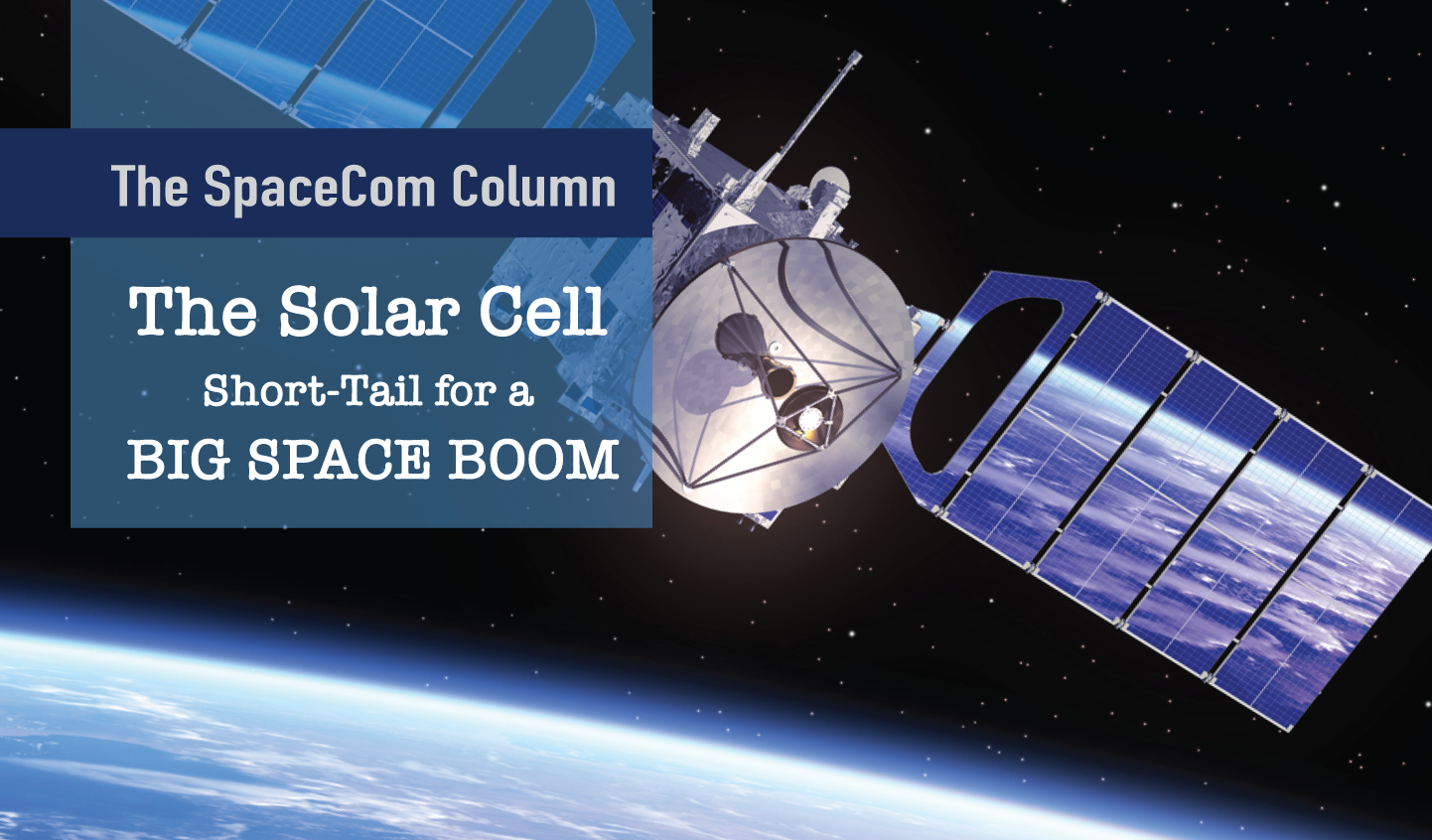
Talk of AI data centers in space with multi-kilometer square solar panel arrays to generate 5 gigawatts of power sounds great before you get into the details as to how you get into producing said arrays in large quantities. Meanwhile, launch-proven space quality solar panels are going to be in growing demand over the next five years. It could make for an interesting bet for someone that wants to be the T. Boone Pickens of space power.
The solar industry has long had its ups and downs in the United States, with a wave of onshoring in 2025 bringing $4.5 billion in private investment through 65 new or expanded solar and storage facilities. According to the Solar Energy Industries Association (SEIA), there’s over 34 GW of U.S. solar cell capacity under construction or announced. Nearly all of this is for ground use, which should put into perspective what it is going to take to build a 5 GW AI –factory –in –the sky, as one startup has proposed.
Consider the space solar panel market in January 2026. SpaceX, the largest commercial purchaser by far, is not yet producing its own cells in-house, but reported obtaining space-qualified ones from various manufacturers such as Azur Space and Spectrolab, a division of Boeing. It will likely continue to be the largest purchaser of space cells between its current activities to support the existing Starlink broadband satellite network and Department of War (DoW) contracts including Starshield and SDA Tranche 1, with a big bump coming when Starship goes into flight service and starts deploying larger next-generation Starlink satellites.
Don’t be surprised if SpaceX either purchases someone else’s solar cell business or uses funding from a future investment round to build a dedicated factory. Given Elon’s broadbrush statements about the benefits of putting data centers into orbit, it would make sense for the company to invest in the capability. However, the Pentagon will not be warm to further concentration of national industrial capabilities under one roof.
Rocket Lab is looking smart with its purchase of SolAero Technologies a few years ago, providing it with vertical integration as well as in-house expertise. To date, the division has manufactured 4MW of cells to power over 1,100 orbiting satellites. Ramping up to build 5 GW of cells for a single customer is a scaling problem they would like to have.
Of course, the golden elephant in the room is Golden Dome, which would add hundreds to thousands more satellites and a multi-year commitment to build and replenish a space-based missile interceptor network. More speculative areas for growth include a fully funded DoW on-demand supply network to deliver time-critical goods from orbit to ground in under 90 minutes or less and beaming solar power to ground installations.
Regardless of Golden Dome’s deployment, there’s a clear growing market for space-grade solar cells to support current and future commercial and government space activities in LEO and for cis-lunar operations. The question becomes if current suppliers can handle “hockey stick” growth and risk that a super-scale gigawatt project would require prior to launch.
The other risk that an earth-bound factory cranking out solar cells may face is off-planet competition from lunar production. Blue Origin and SpaceX have both discussed the value of tapping into the Moon’s resources for local production of solar power hardware, with the former documenting progress on its’ Blue Alchemist efforts to produce the needed materials. Blue’s next step is to produce an “autonomous demonstration” in a simulated lunar environment in 2026, which would presumably lead to a sub-scale lunar demonstration in the next three to five years.
But lunar solar brings its own disadvantage. The abundance of silicon on the Moon to make solar cells is offset by a lack of gallium to make higher-efficiency cells, so earth products might always have advantages over off-planet production in terms of power and mass, depending on the mission and requirements.
The moral of this story for venture capitalists and anyone with a deeper concern around the U.S. space industrial base is to look at the full supply chain for space-grade solar cells and start putting seed money into building factories and processes that have the ability to scale if needed.
# # #
)
)
)
)
)
)
)
)
)
)
)
)
)
)
)
)
)
)
)
)

)
)
)
)
)
)
)
)
)
)
)
)
)
)
)
)
)
)
)
)
)
)
)